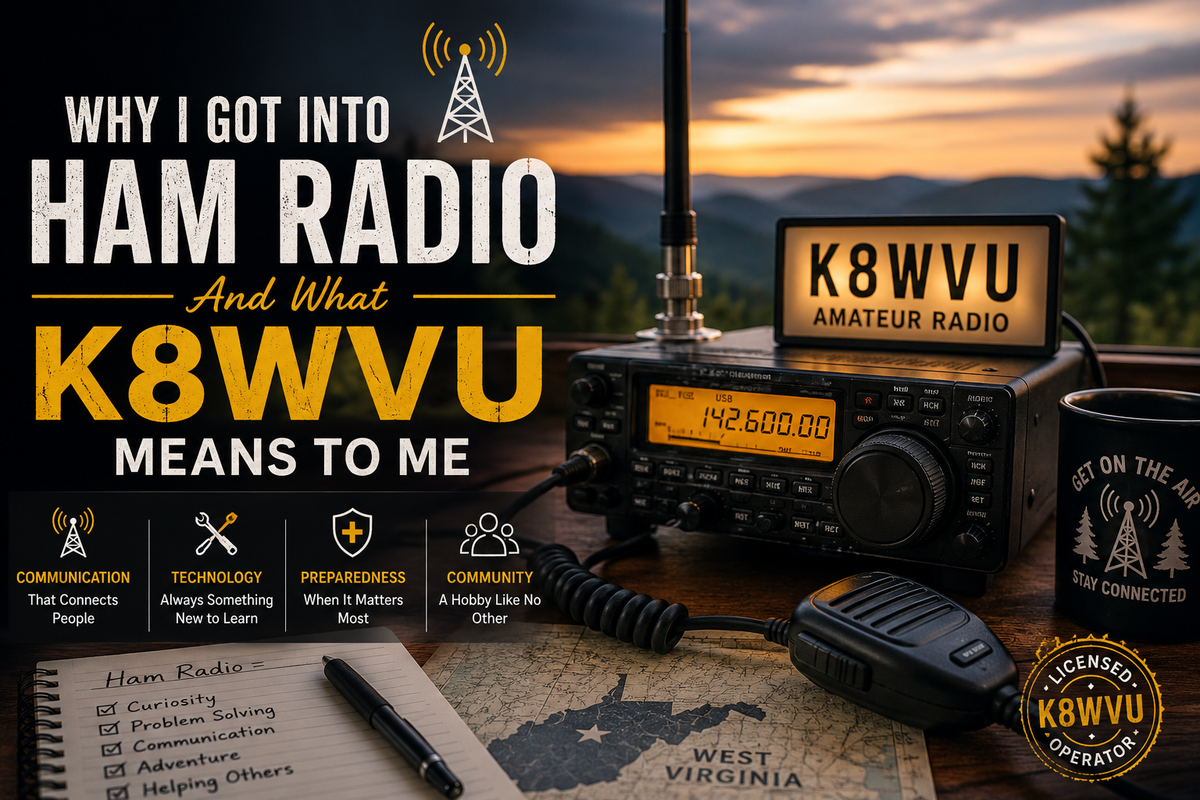
Why I Got Into Ham Radio — And What K8WVU Means To Me

Most people are surprised when they find out I’m into ham radio.
At first glance, it probably sounds like one of those hobbies people assume disappeared decades ago. But honestly, amateur radio is still incredibly active — and in a lot of ways, more relevant than people realize.
For me, ham radio became more than just a technical hobby. It became a way to learn, connect with people, and explore communication in a completely different way.
What Is Ham Radio?
Ham radio, officially known as amateur radio, allows licensed operators to communicate using radio frequencies instead of relying entirely on the internet or cellular networks.
Depending on the equipment and conditions, operators can:
- talk locally
- communicate across states
- connect internationally
- assist during emergencies
- experiment with digital communication
- track weather and events
- and build communication systems completely independent of traditional infrastructure
It’s part technology, part community, and part problem-solving.
Why I Became Interested In It
I’ve always been interested in:
- technology
- communication systems
- emergency preparedness
- public safety
- learning how things work
Ham radio naturally combined all of those interests together.
What surprised me most was how much there still is to learn within the hobby. There’s a huge mix of:
- radio communication
- networking
- digital systems
- weather
- antennas
- emergency operations
- and hands-on experimentation
No two operators really approach the hobby the exact same way.
The Meaning Behind K8WVU
Every licensed ham radio operator receives a unique callsign that identifies them on the air.
For me, K8WVU represents more than just a license.
The “WVU” portion immediately stood out to me because of my West Virginia roots and the connection many people associate with West Virginia University. As someone born and raised in West Virginia, having a callsign that naturally reflects both the state and a recognizable part of Appalachian identity made it feel personal from the beginning.
Beyond that, the callsign represents:
- curiosity
- communication
- learning new skills
- community
- emergency preparedness
- and staying connected in a world that often feels increasingly disconnected
One of the things I enjoy most about amateur radio is how it brings together people from completely different backgrounds through a shared interest in technology and communication.
Ham Radio Is More Modern Than People Think
A lot of people picture old radios sitting in basements when they think about amateur radio.
And while some operators absolutely enjoy the vintage side of the hobby, modern ham radio also includes:
- digital messaging
- internet-linked systems
- GPS tracking
- Raspberry Pi projects
- portable communication setups
- satellite communication
- emergency networking
- and off-grid experimentation
There’s a surprisingly large overlap between ham radio, technology, and modern maker culture.
Why It Still Matters
One thing I respect about amateur radio is that it doesn’t completely depend on modern infrastructure.
When:
- storms happen
- internet fails
- power goes down
- cell service becomes unreliable
radio communication still has value.
That’s one reason amateur radio operators continue to assist during emergencies and public events across the country.
Final Thoughts
For me, ham radio became more than just a hobby.
It became another reminder that communication still matters — especially in a world where everything moves incredibly fast and depends heavily on systems most people never think about until they stop working.
And honestly?
There’s just something really cool about hearing voices and signals travel across mountains, cities, and sometimes entire countries using equipment you built, programmed, or configured yourself.